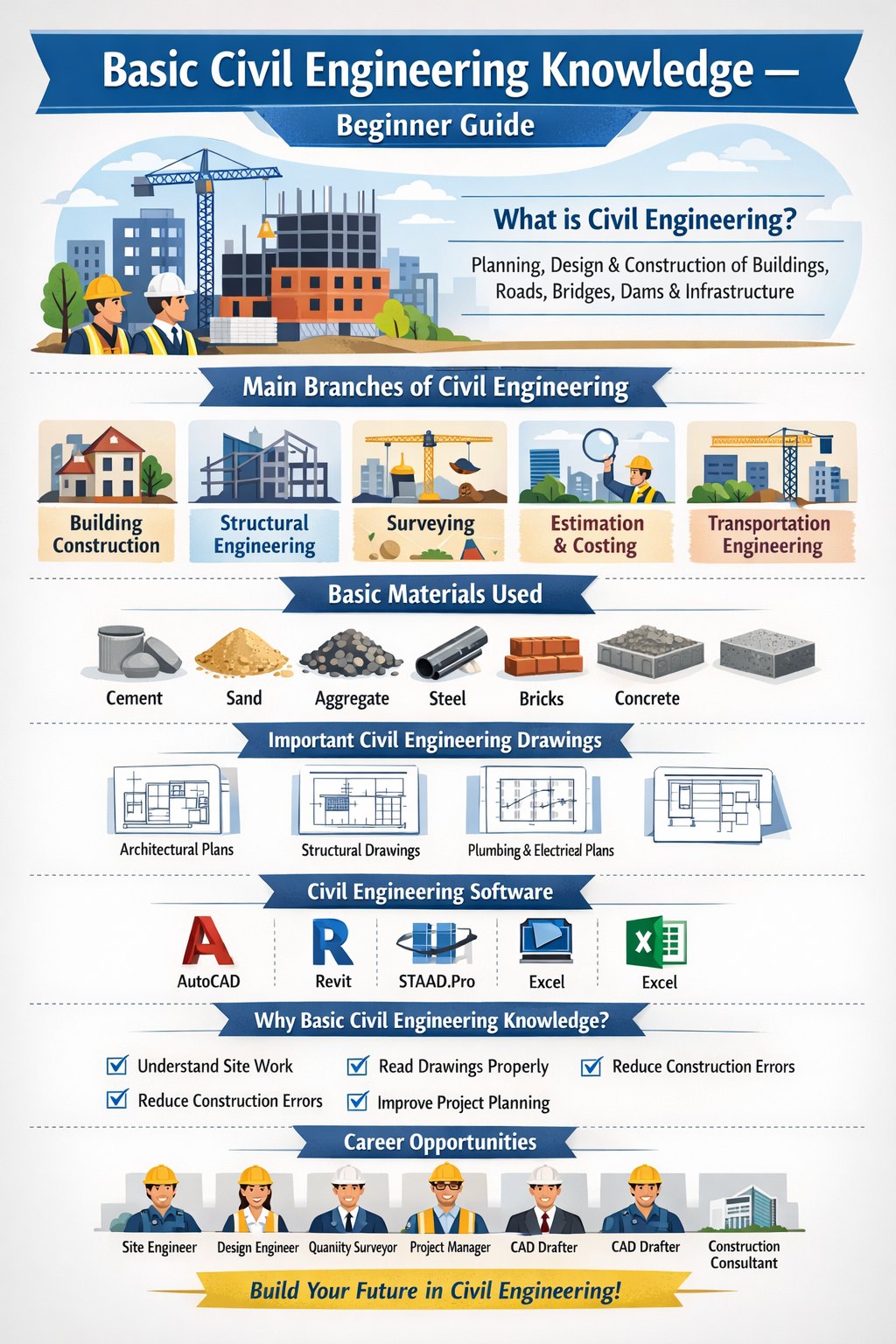
Civil Engineering is one of the oldest and most important branches of engineering. It deals with the planning, design, construction, and maintenance of buildings, roads, bridges, dams, and infrastructure projects that support daily life.
This blog explains the basic concepts of civil engineering in simple language for students, beginners, and site engineers.
What is Civil Engineering?
Civil Engineering is the art and science of creating structures that are safe, strong, economical, and durable. Civil engineers convert drawings and calculations into real-life structures.
Main Branches of Civil Engineering
1. Building Construction
- Residential buildings
- Commercial buildings
- Industrial structures
Includes foundation, columns, beams, slabs, and finishing works.
2. Structural Engineering
- Design of RCC and steel structures
- Load calculation (Dead load, Live load, Wind load, Earthquake load)
- Software used: AutoCAD, STAAD.Pro, ETABS, SAFE
3. Surveying
- Measurement of land and levels
- Boundary marking
- Instruments: Total Station, Auto Level, Theodolite
4. Estimation & Costing
- Quantity calculation
- Material estimation
- Budget preparation
- BOQ and Excel estimation sheets
5. Transportation Engineering
- Road design
- Highway planning
- Traffic engineering
6. Environmental Engineering
- Water supply systems
- Sewerage systems
- Waste management
Basic Materials Used in Civil Engineering
- Cement – Binding material
- Sand – Fine aggregate
- Aggregate – Coarse material
- Steel – Tensile strength
- Bricks & Blocks – Wall construction
- Concrete – Mix of cement, sand, aggregate, and water
Important Civil Engineering Drawings
- Architectural drawings
- Structural drawings
- Electrical & plumbing drawings
- Working drawings (DWG files)
Important Civil Engineering Software
- AutoCAD – Drawing and drafting
- Revit Architecture – 3D modeling & BIM
- Excel – Estimation and calculations
- STAAD.Pro / ETABS – Structural design
Why Basic Civil Engineering Knowledge is Important?
✔ Helps understand site work
✔ Improves drawing reading skills
✔ Useful for engineers, students, contractors
✔ Reduces construction mistakes
✔ Improves project planning and costing
Career Opportunities in Civil Engineering
- Site Engineer
- Design Engineer
- Quantity Surveyor
- Project Manager
- CAD Drafter
- Construction Consultant
Conclusion
Basic civil engineering knowledge is essential for anyone involved in construction, design, or real estate. Learning fundamentals like drawings, materials, estimation, and software tools builds a strong foundation for a successful career in civil engineering.